My Rosacea Flare: How I Got My Skin Back on Track
Terry Robson, co-founder and Aesthetic Nurse Practitioner at Perfectus Derma, on the flare that made him reassess his own skin, and what he learned from managing it.
In this article
- I thought I knew my rosacea
- What rosacea actually is
- When my skin started to flare
- Going back to basics
- Recognising when skincare was not enough
- Building my routine back up
- Looking at more than my skin
- Where LED fitted in
- What actually helped
- The triggers I have learned to recognise
- What this flare taught me as a nurse
- If your skin is currently flaring
- Skin consultations at Perfectus Derma
- Where my skin is now
- Sources
I thought I knew my rosacea
My name is Terry Robson. I am a co-founder of Perfectus Derma Aesthetics, a Registered Nurse, an Independent Nurse Prescriber and an Aesthetic Nurse Practitioner.
I also live with rosacea myself.
That means my understanding of the condition is both professional and personal. I assess and treat skin every day in clinic, and I also know what it feels like when your own skin becomes inflamed, reactive and unpredictable.
Having managed my rosacea for several years, I felt I understood it fairly well. I knew many of my triggers, recognised the early signs of a flare and had learned which approaches generally kept my skin relatively stable.
My rosacea tends to present with persistent facial redness, inflammatory papules and increased sensitivity. Stress, heat and environmental changes are among the factors I have learned can aggravate it.
But living with a chronic skin condition can remind you, occasionally quite dramatically, that what worked before will not necessarily always be enough.
Across 2025 and into 2026, my skin became increasingly difficult to manage.
What rosacea actually is
Before I go further, it is worth separating my experience from the general picture.
Rosacea is a long-term skin condition that mainly affects the face. The NHS describes symptoms including facial redness and flushing, visible blood vessels, spots and, in some people, eye irritation. It is a recognised medical skin condition, not a cosmetic concern, and it has no cure. What it does have is management.
Presentations vary a great deal between people. Mine involves inflammatory papules, which is one pattern among several. Someone else with the same diagnosis may have very different skin, triggers, medical history and tolerances.
That is worth holding on to while reading the rest of this, because everything below is one person’s experience.
When my skin started to flare
This was not an occasional day of increased redness.
My skin became persistently inflamed and reactive, with redness and inflammatory papules affecting my cheeks and forehead. My skin barrier felt compromised and the frequency of inflammatory episodes increased.
It was frustrating, not only because of how my skin looked and felt, but because I already knew a great deal about my condition and was doing many of the things that had previously helped.
That is probably the most useful thing I can share from this experience: a flare does not necessarily mean you have done something wrong.
Rosacea is chronic. Symptoms fluctuate, triggers change, and sometimes an established routine simply is not enough for what your skin is experiencing at that particular time.
Going back to basics
When skin becomes reactive, there is a temptation to keep adding things. A new serum. Another active. Another treatment.
For me, the opposite was more useful.
I needed to look again at what my skin was actually doing, rather than continuing with a routine because it had worked previously. I focused on reducing unnecessary irritation, supporting my skin barrier and reassessing the products I was using.
My current skincare is based around NOON Aesthetics, selected according to my own tolerance and concerns.
I do not think there is a universal “rosacea skincare routine”. What suits my skin may not suit somebody else’s, and even my own needs have changed over time.
Recognising when skincare was not enough
This is where my clinical background mattered.
Rosacea is not simply a cosmetic concern, and there are times when skincare alone is not enough. During the acute inflammatory phase of my flare, following appropriate medical assessment, my treatment included a short course of an oral antibiotic and a topical prescription treatment.
I am describing them in general terms deliberately. Prescription medicines are assessed and prescribed individually, and what was appropriate for me is not a recommendation for anyone reading this.
For me, seeking medical treatment was not a failure of my skincare routine. It was recognising what my skin needed at that point.
Building my routine back up
Once the more acute inflammatory phase was being addressed, my focus shifted to a routine my skin could tolerate and maintain consistently.
During 2026, I brought the AWvi Skin Method into my wider routine:
- AWvi The Gentle Cleanser
- AWvi The Active Cream
- AWvi The Skin Biotic
I used these alongside my NOON Aesthetics skincare and regular Dermalux MD FLEX LED sessions.
The important word is alongside.
I did not stop one thing, start AWvi and suddenly see my rosacea disappear. My skin was being supported through a combination of approaches, including prescribed treatment when it was needed.
That makes it impossible, and in my view inappropriate, to attribute the improvement to one product or treatment.
What I can say is that the AWvi products integrated well into my routine, suited my skin during this period and have remained part of how I maintain it.
Looking at more than my skin
This experience also made me think more broadly about my health.
I introduced AWvi The Skin Biotic as part of that, and became more interested in gut health and the wider relationship between internal health and skin. During this period I personally noticed an improvement in my gastrointestinal comfort, particularly a reduction in reflux symptoms.
I want to be responsible about how I describe that.
I am not suggesting that improving gut health treats rosacea, and I cannot say that The Skin Biotic caused the changes I observed in either my skin or my gastrointestinal symptoms. This is one person’s experience.
What it has done is encourage me to think about health and skin as connected rather than separate.
Where LED fitted in
I also had regular Dermalux MD FLEX LED sessions during this period.
Again, I consider this one component of a wider routine rather than the treatment responsible for getting my rosacea back under control.
When several things are being used together, I do not think it is credible to pick one afterwards and claim it caused the result. That transparency matters to me as both a practitioner and a patient.
What actually helped
If somebody asked me which one thing fixed my skin, I could not give them an answer. That is rather the point.
For me, getting back on track involved:
- Recognising that I was having a significant flare rather than simply “bad skin”
- Going back to basics and reducing unnecessary irritation
- Reassessing my skincare
- Using appropriate prescribed treatment during the acute inflammatory phase
- Developing a routine my skin could tolerate consistently
- Bringing AWvi into my ongoing approach
- Using Dermalux MD FLEX as part of my wider routine
- Paying more attention to my general health and lifestyle
- Continuing to understand and manage my individual triggers
Most importantly, I stopped expecting one product to solve everything.
The triggers I have learned to recognise
My personal triggers include heat, intense exercise, spicy food, alcohol, certain products and stress. They will not necessarily be the same as somebody else’s.
Keeping a trigger diary has been particularly useful, because it let me identify patterns rather than guess what might have caused each flare.
I also do not try to live a life where every possible trigger is eliminated. For me it is about awareness, moderation where appropriate, and recognising when several factors may be contributing at once.
What this flare taught me as a nurse
As a nurse and prescriber, I am used to approaching skin concerns clinically and systematically.
Having a significant flare myself was a useful reminder that clinical knowledge does not make you immune to the frustration of a chronic skin condition, and that even a well-established routine sometimes needs reassessing.
It reinforced how important it is to treat the person and the skin in front of you rather than follow a fixed protocol.
It also reinforced why I am cautious when people ask me for “the best product for rosacea”. There is not one answer. Two people can have the same diagnosis and very different skin, triggers, medical histories and tolerances, and the same person’s needs can change over time. That is exactly what happened to me.
If your skin is currently flaring
If there is one thing I would want somebody reading this during a difficult period with their own skin to understand, it is that a flare does not mean you have failed.
Try not to compare your skin with somebody else’s photographs, or immediately copy their entire routine.
Persistent redness, inflammatory lesions or worsening symptoms may need appropriate medical assessment rather than another cosmetic product. Eye symptoms in particular should be assessed rather than assumed to be part of sensitive skin.
Skin consultations at Perfectus Derma
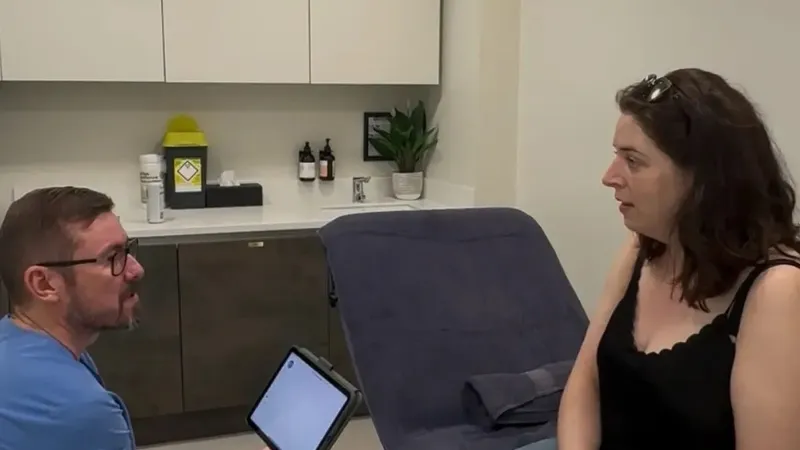
At Perfectus Derma, our Aesthetic Nurse Practitioners can support patients concerned about redness, sensitivity, skin quality or their current skincare through a face-to-face skin consultation, within our scope of practice.
Where appropriate, facial and skin analysis can provide additional information to support our assessment and personalised skincare recommendations. Facial analysis is not used to diagnose rosacea.
Where symptoms require medical diagnosis, investigation or prescription treatment outside the services we provide, we will recommend appropriate assessment by a GP, dermatologist or other relevant healthcare professional.
Where my skin is now
My skin is much more settled.
But I do not consider my rosacea fixed. I manage it, and that distinction has been one of the most important things I have learned.
My current routine will not necessarily stay the same forever. My triggers may change. My skin may flare again. If it does, I will reassess what is happening and adapt.
Getting my skin back on track was not about discovering a miracle product. It was about recognising that something had changed, responding appropriately and giving my skin what it needed at that stage.
Terry Robson Co-founder, Perfectus Derma Aesthetics Registered Nurse · Independent Nurse Prescriber · Aesthetic Nurse Practitioner
Sources
- NHS: rosacea
- British Association of Dermatologists: rosacea patient information leaflet
- NHS: before you have a cosmetic procedure
- ASA/CAP: prescription-only medicines, key advice and resources
Frequently asked questions
What is rosacea?
Rosacea is a long-term skin condition that mainly affects the face. The NHS describes symptoms including facial redness, flushing, visible blood vessels and spots. It is a recognised medical skin condition rather than a cosmetic concern, and symptoms can fluctuate over time even when a routine has been stable.
Does a rosacea flare mean I have done something wrong?
No. Rosacea is a chronic condition, so symptoms can fluctuate, triggers can change, and an established routine is sometimes not enough for what your skin is experiencing at that time. Recognising that a flare is happening, and being prepared to reassess, matters more than blaming the routine.
What are common rosacea triggers?
Triggers vary between individuals. Commonly reported ones include sun exposure, heat, stress, spicy food, alcohol and changes in temperature. Keeping a trigger diary helps identify patterns rather than guessing, which is more useful than trying to eliminate every possible trigger from your life.
When should rosacea be assessed by a doctor?
Persistent redness, inflammatory lesions or worsening symptoms may need appropriate medical assessment rather than another cosmetic product. Eye symptoms in particular should be assessed rather than assumed to be sensitive skin. Where a concern needs medical diagnosis or prescription treatment, we recommend assessment by a GP or dermatologist.