How to Choose a Nurse-Led Aesthetics Clinic (and Verify Your Practitioner)
Professional registration, prescribing standards, accreditation and insurance are all things you can check for yourself. Here is where to look, and what each check does and does not tell you.
In this article
Why this matters
Regulation of non-surgical aesthetics in the UK can vary depending on the treatment, the practitioner and the setting. That makes it particularly important for patients to understand who is treating them, what professional registration or qualifications they hold, and what standards the clinic follows.
The useful part is that most of this is public and free to check. A few minutes of reading before you book will tell you a great deal about how a clinic works.
What “nurse-led” actually means
There is no universal regulatory definition of a nurse-led clinic, so it is worth asking any clinic what they mean by it.
For us, being nurse-led means that our aesthetic consultations and treatments are delivered within a nursing-led clinical model, with registered nurses applying their professional training, clinical judgement and responsibilities under the NMC Code. Our clinical team is made up of Aesthetic Nurse Practitioners, all of them registered nurses, and treatment planning is shared across that team rather than resting with one person.
That model matters because injectable treatments are clinical procedures. Assessing suitability, managing risk and recognising and handling a complication all depend on clinical training, and a registered nurse works under a regulator that can hold them to account.
The checks worth doing
1. Check the NMC public register
Every nurse in the UK is registered with the Nursing and Midwifery Council and holds a PIN. If someone describes themselves as a registered nurse, you should be able to verify their registration on the NMC public register. It shows whether their registration is current and effective, and records any restrictions or cautions against it.
Names are often shared, so you can also ask a practitioner for their PIN to help you identify the correct registration.
2. Ask about the prescriber
Some treatments involve a prescription-only medicine, and where they do, additional prescribing requirements apply.
An Independent Nurse Prescriber is a nurse who has completed further training and is legally able to prescribe. Since 1 June 2025, NMC independent nurse and midwife prescribers must carry out a face-to-face consultation and undertake and document an appropriate clinical assessment before prescribing any product used for an elective non-surgical cosmetic procedure. The NMC is explicit that remote assessment by telephone, email, online, video or through a third party is not appropriate for this purpose, and that this applies to follow-up appointments as well as the first one. You can read the requirement in the NMC’s information for prescribers.
So it is a fair and specific question to ask: who prescribes, and will they assess me in person?
3. Look for Save Face accreditation
Save Face operates a Professional Standards Authority Accredited Register for healthcare professionals providing non-surgical cosmetic treatments. Its accreditation process includes assessment of practitioners and of the premises from which they practise.
You can search the register at saveface.co.uk. Perfectus Derma Aesthetics is Save Face accredited.
Patients may also come across voluntary professional registers and standards organisations within the aesthetics sector, including the Joint Council for Cosmetic Practitioners, which holds registers of practitioners and of education and training providers.
4. Confirm the clinic is insured
Practitioners should hold appropriate professional indemnity insurance for the treatments they provide, and it is reasonable to ask a clinic to confirm that appropriate cover is in place. Perfectus Derma Aesthetics holds professional indemnity insurance for the treatments we offer.
5. Expect a thorough consultation
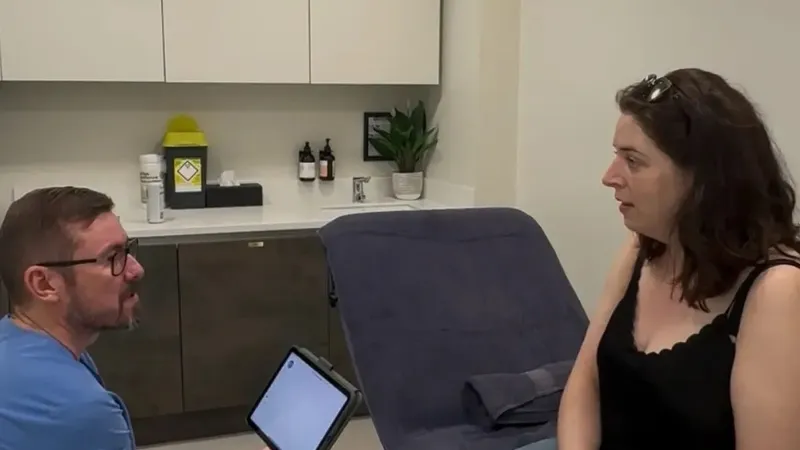
A thorough consultation is an important part of responsible aesthetic practice. It is where suitability, expectations, risks, alternatives and aftercare are discussed, and where you get the time to think.
The NHS advises patients to take time over the decision, to ask questions and to expect a cooling-off period after a consultation rather than being asked to decide on the spot. Its guidance on what to consider before a cosmetic procedure and on choosing who will carry it out is a useful patient-facing starting point.
Where a treatment involves a prescription medicine, the face-to-face clinical assessment described above applies in addition.
Things to consider before choosing a clinic
None of these mean a clinic is unsafe. They are simply worth asking about before you commit:
- How the consultation works. Whether you are assessed before treatment, and how much time that assessment is given.
- How you are asked to decide. Time-limited offers and same-day pressure make it harder to think clearly. You should feel able to take your plan away.
- How registration is evidenced. Whether a practitioner can point you to their entry on the NMC or another healthcare register.
- How prescribing is handled. Whether a prescriber assesses you in person, in line with the requirement above.
- Where treatment takes place. Whether the setting is a suitable clinical environment for the procedure involved.
- What happens afterwards. Whether you are given written aftercare, and whether follow-up and review are offered.
Questions worth asking
Bring these to any clinic, including ours:
- Are you a registered nurse, and what is your name as it appears on the register?
- Who prescribes any medicine involved, and will they assess me in person?
- Are you Save Face accredited and appropriately insured?
- What happens if I have a complication, and what does aftercare include?
- What will my consultation cover before any treatment is agreed?
A reputable clinic should be happy to answer these openly and give you the information you need to make an informed decision.
Bottom line
Choosing an aesthetics clinic does not need to be complicated. Checking professional registration, appropriate insurance, clinic standards and the consultation process can help you make a more informed decision. Above all, you should feel comfortable asking questions, understand the proposed treatment and have enough time to decide whether it is right for you.
Sources
- NMC: search the register
- NMC: useful information for prescribers, including the face-to-face assessment requirement effective 1 June 2025
- NMC: the Code
- ASA/CAP: prescription-only medicines, key advice and resources
- ASA/CAP: non-surgical cosmetic procedures
- NHS: before you have a cosmetic procedure
- NHS: choosing who will do your cosmetic procedure
- Professional Standards Authority: Save Face Accredited Register
- Save Face: why use Save Face
- Joint Council for Cosmetic Practitioners: about the JCCP
Frequently asked questions
What does nurse-led mean?
There is no single regulatory definition. For us, nurse-led means our aesthetic consultations and treatments are delivered within a nursing-led clinical model, with registered nurses applying their professional training, clinical judgement and responsibilities under the NMC Code. It matters because injectable treatments carry clinical risk that needs assessing and managing.
How do I check that a nurse is registered?
Search the public register held by the Nursing and Midwifery Council. It confirms whether a nurse holds current effective registration and shows any restrictions or cautions recorded against it. You can ask a practitioner for their PIN to help you identify the correct entry, since names are often shared.
What are the prescribing rules for cosmetic treatments?
Where a treatment involves a prescription-only medicine, additional prescribing requirements apply. Since 1 June 2025, NMC independent nurse and midwife prescribers must carry out and document a face-to-face clinical assessment before prescribing medicines used for elective non-surgical cosmetic procedures. Remote assessment is not appropriate for this purpose.
What should I ask a clinic before booking?
Ask who will treat you and what registration they hold, who prescribes any medicine and whether they will assess you in person, whether the clinic is accredited and appropriately insured, what aftercare includes, and what happens if you have a complication. A reputable clinic will answer all of these openly.