Loss of Firmness & Skin Laxity Treatment in Soho
Skin laxity treatment in Soho, London, for skin that has lost its firmness and spring. Our NMC-registered nurses rebuild skin quality gradually, with regenerative treatments and a plan made for you.

Overview
Understanding skin laxity
Skin laxity is the gradual loss of firmness and elasticity that develops as the skin's collagen and elastin decline, leaving it looser, thinner and slower to spring back. Collagen production falls steadily from the late twenties, and the elastin fibres that let skin snap back degrade with sun exposure and time. The change shows first along the jawline and lower face: skin softens and drifts, folds deepen either side of the mouth, and the neck loses its smooth, firm surface. Because this is a change in skin quality itself, creams alone rarely turn it around.
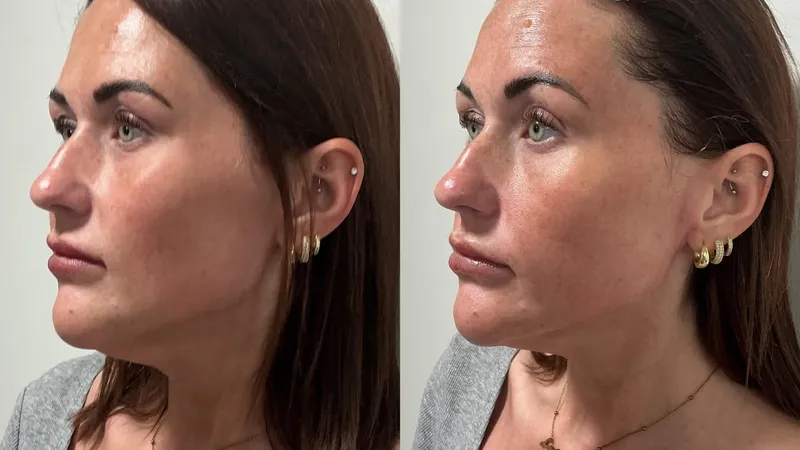
At Perfectus Derma we treat laxity with regenerative aesthetics rather than volume. Polynucleotides and injectable skin boosters work within the dermis to stimulate your own collagen and restore deep hydration, while SkinPen microneedling triggers fresh collagen exactly where firmness has faded. Improvement is gradual and cumulative, building over a course of sessions rather than overnight. The result should look like your skin at its best, not like something added to it, and every plan starts with a face-to-face consultation and facial analysis with one of our nurses in Soho.
Why it happens
What causes skin laxity?
- Collagen production declining steadily from the late twenties onwards
- Elastin fibres degrading, so skin stretches but no longer springs back
- Cumulative UV exposure breaking down the skin's supportive structure
- Falling oestrogen through perimenopause and menopause, which accelerates collagen loss
- Smoking, which restricts blood supply to the dermis
- Significant weight change stretching skin faster than it can adapt
Treatment approach
How we treat skin laxity
Polynucleotides
£220 per sessionOur first-line regenerative treatment for laxity. PhilArt and Plinest polynucleotides, derived from purified salmon DNA, signal your skin to repair and rebuild its own collagen and elasticity. A course of 2 to 3 sessions spaced weeks apart is typical, at £220 per session or £600 for 3, with firmness improving over the following weeks.
See treatment detail →Skin Boosters
From £170Injectable skin boosters such as Jalupro and Stylage HydroMax (£280) flood the dermis with deep hydration and support elasticity, so skin looks denser, smoother and better able to hold its shape. They pair naturally with polynucleotides in a staged plan when laxity and dullness arrive together.
See treatment detail →Microneedling (SkinPen)
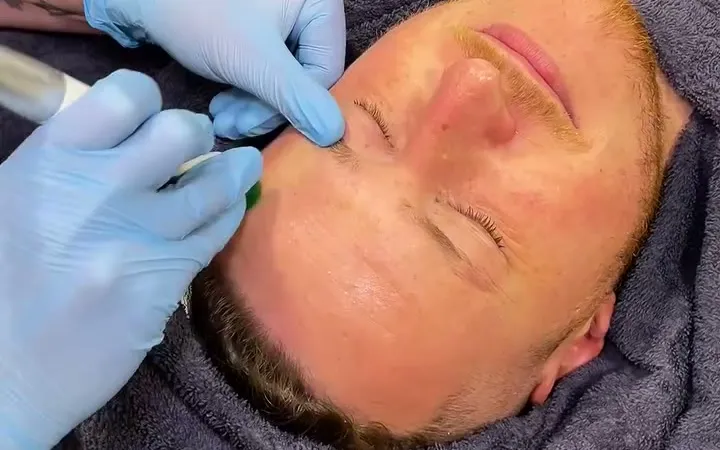
From £220SkinPen Precision microneedling creates thousands of controlled micro-channels that switch on your skin's own collagen production. A course of 3 sessions (£600 for the face) firms texture gradually over around 3 months, and works well alongside injectable regenerative treatments.
See treatment detail →FAQ
Common
questions
Which skin firming treatment is right for me?
It depends on where laxity shows, how your skin has changed and what else is happening alongside it. That is why every plan starts with a face-to-face consultation in Soho, where our nurses use 3D Visage facial analysis to assess your skin before recommending anything. You leave with a personalised plan, not a menu.
Can skin firmness really improve without surgery?
Mild to moderate laxity responds well to regenerative treatments that rebuild collagen from within, though change is gradual rather than dramatic. Where laxity is more advanced, we will say so honestly at consultation and explain what non-surgical treatment can and cannot achieve. Individual results vary, and honest expectations are part of good care.
How long do results take to show?
Regenerative treatments work with your skin's own repair, so improvement builds over weeks rather than days. Most patients notice change 3 to 4 weeks after a polynucleotide or skin booster session, with the full result developing across a course. Collagen from microneedling keeps remodelling for around 3 months after each session.
What is the difference between polynucleotides and skin boosters?
Polynucleotides are regenerative: purified DNA fragments that signal your skin to repair, rebuild collagen and improve elasticity over time. Skin boosters deliver deep hydration with hyaluronic acid, improving glow, softness and fine crepiness more directly. Many patients benefit from both in sequence, which we map out at consultation.
Will my skin look pulled or unnatural?
No. Regenerative treatments improve the quality of your own skin rather than adding volume or tension, so the change reads as healthier, naturally refreshed skin rather than work you have had done. We build gradually, review as we go, and would always rather under-treat than overdo it.
Related Concerns
Get Started
Ready to begin?
Book today.
Perfectus Derma Aesthetics • 111 Charing Cross Road, London WC2H 0DT
BookAppointments typically available within 1–2 weeks